
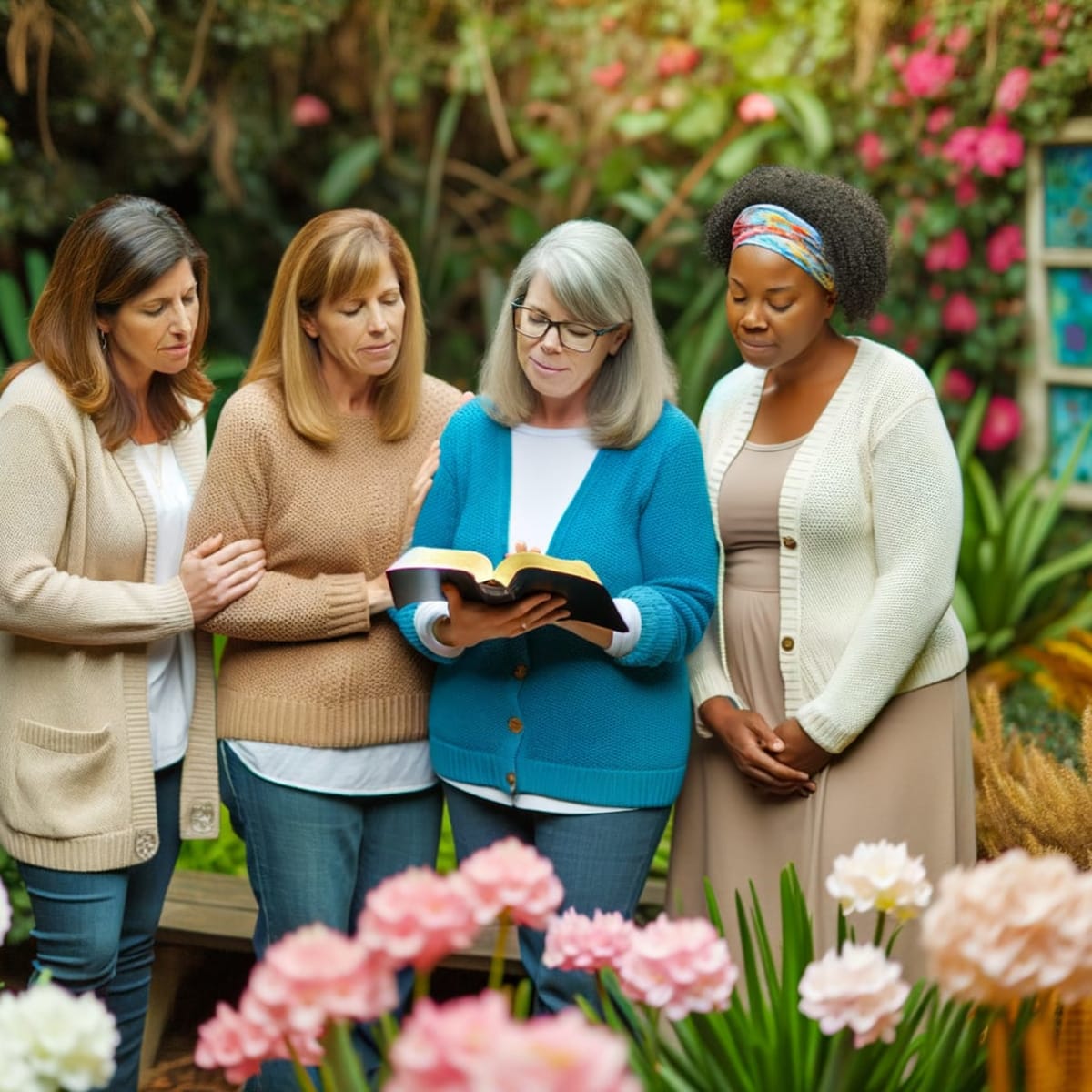
Sharing Testimony Without Control Starts with Obedience, Not Results
Sharing testimony without control is for the woman who feels the Holy Spirit nudging her to tell what God has done, but also feels that tight little grip in her chest when she thinks about what people might do with it. In this post, I want to help you share your story with wisdom, healthy boundaries, and peace, without trying to manage every reaction after the words leave your mouth.
How many of you have ever shared something tender and then immediately wanted to grab the words back out of the air? Hand to heart, I have. You say the thing. You feel the room shift. Then your mind starts running. Did that land wrong? Did I say too much? Do they understand what I meant?
Friend, this is where faith gets very practical. Most of us don’t mind sharing nearly as much as we mind not knowing what will happen after we share. And in our recent conversation on the Perspectives Into Practice podcast, we talked about this exact tension: sharing testimony without control starts with obedience, not results.
Why Sharing Testimony Without Control Feels So Hard
Can I tell you something? A lot of us confuse being responsible with being in control. We think if we share the right way, with the right tone, in the right moment, then we can guarantee the right outcome.
But people are not math problems. Hearts are not light switches. I’ve had moments where I shared something I thought was simple, and it landed heavier than I expected. I’ve also had moments where I felt shaky and unprepared, and God used it anyway. That part humbles me every time.
We want peace, but we reach for control
I relate to the impulse to watch someone’s face and look for proof that the story mattered. I want the nod. I want the soft eyes. I want the sentence that tells me I didn’t mess it up.
Here’s the thing. Peace doesn’t come from managing what people do with your words. Peace comes from knowing you did what God asked, and then letting Him hold the rest.
Sharing testimony without control is not about being careless. It’s about being surrendered. It means I tell the truth God asks me to tell, with love and discernment, and I stop trying to become the Holy Spirit in someone else’s heart.
Sometimes control is fear in nicer clothes
Sometimes we’re not trying to control people. We’re trying to control pain. We’re afraid of being misunderstood. Afraid of awkward silence. Afraid someone will judge what God redeemed. Afraid they will dismiss the very thing that cost us so much to bring into the light.
Fear can make us over-explain. It can make us overshare. It can make us rehearse our story until it sounds safer, cleaner, less human. But testimony was never meant to be a polished performance. It is a witness to the faithfulness of God.
If this struggle connects to a bigger pattern of needing guarantees before you obey, you may find encouragement in this post on asking different questions for peace. Sometimes the question shifts from, How do I make this go well? to, Lord, what are You asking me to do?
What the Bible Says About Sharing Testimony Without Control
Psalm 107:2 has become such a steady anchor for me: “Let the redeemed of the Lord proclaim that he has redeemed them from the power of the foe” (Psalm 107:2 CSB).
That verse is simple, but it is not small. It gives the redeemed a voice. It tells us to proclaim what God has done. It invites us to say, I was bound, and He rescued me. I was lost, and He came for me. I was buried under shame, and He brought me into freedom.
But notice what it does not say. It does not say, Let the redeemed of the Lord make sure everyone responds well. It does not say, Let the redeemed control the room. It does not give us a scoreboard.
It says proclaim.
Speak what He has done.
Let your life point back to Him.
That is why sharing testimony without control can be so freeing. Scripture gives us an assignment, but it does not ask us to carry the outcome.
Obedience is ours, outcomes are God’s
This has become one of my go-to reminders, and I say it to myself often. The obedience is ours. The outcome is God’s.
We get to show up with honesty and gentleness. We get to share hope. We get to tell the part God is asking us to tell. Then we release it. Not because we don’t care, but because we trust Him more than we trust our ability to manage the moment.
My friend, if you’re in a season where God is asking you to move without seeing the full picture, this reflection on trusting God’s next step may meet you right where you are. Obedience often looks like one small yes before we feel ready.
How to Share With Freedom and Healthy Boundaries
Let me tell you, discernment matters. Sharing testimony without control does not mean telling everyone everything. There are times to speak, and there are times to wait. Being bold is about obedience, not over-sharing.
Start with this question: Lord, what are You asking me to say?
Not, What do I want them to think? Not, How do I make this land perfectly? Just, What part of this story are You asking me to share right now?
Sometimes it is one sentence. Sometimes it is a longer story. Sometimes it is silence because your heart needs more healing first. I really believe the Holy Spirit is kind enough to lead us in both directions.
Ask if you are sharing from freedom or pressure
This one is big, ladies. We can share from a healthy place, or we can share from a needy place. I have done both.
I have shared when I wanted relief more than obedience. I have shared because I wanted someone to validate me. I have shared and then replayed every word like I was grading myself afterward. Hand to heart, yes.
Sharing testimony without control looks like telling the truth from freedom, not from a need to force someone else to understand, approve, or respond a certain way.
Simple questions to pray through before you share
- What does God want to communicate through my story?
- Is my heart healed, or at least in process?
- Does this person need details, or do they need hope?
- Am I sharing to glorify God or to relieve my anxiety?
- Am I willing to trust God with the outcome?
Those questions have helped me slow down. They help me remember that not every open door is my assignment, and not every tender place needs to be placed in front of every person.
Healthy boundaries help your story stay sacred
You can be honest and still have boundaries. You can be open and still be wise. I love this reminder because I need it too: not everyone has earned a front row seat to your whole story.
Here are a few boundary practices that help when I’m sharing testimony without control:
- Share the hope, not every detail.
- Honor your healing process. Raw places may need care before they need public words.
- Choose safe community with people who handle stories gently.
- Release the outcome, even if the moment feels awkward.
- Ask for prayer before you share something tender.
That is not hiding. That is wisdom. And if you’re learning how community helps you discern what to share and when, I think you’ll appreciate this piece on supportive community in discernment.
What to Do When Someone Reacts Badly After You Share
Let’s be real. This is the part that makes us want to stay quiet.
You share something sincere, and they change the subject. Or they give you a strange look. Or they offer advice you didn’t ask for. Or they say nothing at all.
I’ve been there. Vulnerability can feel risky because sometimes people do not know how to hold what we hand them. But sharing testimony without control means I don’t interpret every reaction as a verdict on my story.
A quiet response does not mean God was absent. A clumsy response does not mean you failed. A misunderstanding does not cancel your obedience.
Sometimes the seed is planted quietly
I remember writing about a night when I shared my testimony and had no idea what was at stake. Later, a young woman told me that what she heard helped her choose life for her baby. I did not know in the moment. God did.
That memory still brings tears to my eyes because it reminds me that we are not the ones measuring impact in real time. We are messengers. We scatter seeds. God is the One who knows the soil.
So if you share and the room feels still, don’t panic. If someone doesn’t say much, don’t assume nothing happened. God works in hidden places all the time.
Let your testimony be an offering, not a performance
I need this reminder often. Testimony can turn into a performance when I try to say it perfectly or make it sound impressive. But an offering is different. An offering is lifted open-handed.
It says, Lord, use this.
It says, I trust You with what I cannot see.
It says, I will be faithful with my part and let You be God with the rest.
If you tend to replay and critique yourself after you obey, you may also be encouraged by this post about obedience over clarity today. It is such a gentle reminder that God does not require us to have the whole map before we take the next faithful step.
Practical Ways to Practice Sharing Testimony Without Control
I used to think testimony meant microphones, stages, and big dramatic moments. But most of the time, it looks like a conversation in the kitchen. A text message. A walk around the neighborhood. Sitting across from another woman with coffee between you, saying, Can I tell you something God has been teaching me?
God loves using ordinary places. He really does.
Start small and stay faithful
Faith grows in tiny, unseen acts of yes. You don’t have to start with the whole story. Start with the next obedient sentence.
- Write one part of your story in five to seven sentences.
- Pray Psalm 107:2 over yourself before you share.
- Tell your story to God first, then share it with one trusted woman.
- Ask the Holy Spirit for timing, tone, and tenderness.
- After you share, do something normal. Make dinner. Fold laundry. Take a walk. Let your nervous system learn that obedience is safe with God.
And if you feel the urge to control the outcome, name it honestly. Lord, I’m gripping again. Help me open my hands.
That is sharing testimony without control in real life. Not dramatic. Just steady.
Don’t wait until your story feels tied up
You are not disqualified because your story still has questions in it. You do not have to wait until every loose end is neatly tucked away before you can say God has been faithful.
Now, that does require wisdom. You don’t need to share every detail while you are still bleeding. But you can share what God has done in the middle, too. You can say, I’m still walking through this, but I have seen His mercy. I don’t have every answer, but I know He has not left me.
Sometimes that kind of honest testimony is exactly what another woman needs. Not a perfect ending. A faithful witness.
Key Takeaways and Next Steps for Open-Handed Obedience
Okay friends, let’s make this practical and simple. Sharing testimony without control is not about getting every word right. It is about being faithful with what God has entrusted to you.
- God asks us to proclaim what He has done, not manage every response.
- Discernment matters. Boldness and boundaries can live together.
- Your story is an offering, not a performance.
- Awkward reactions do not erase obedient faithfulness.
- Small, ordinary moments can become holy ground when God is in them.
Jesus said, “So if the Son sets you free, you really will be free” (John 8:36 CSB). We share from that freedom. Not to prove ourselves. Not to control outcomes. Not to make people respond the way we hoped.
We share because He redeemed us.
We share because someone else may need hope.
We share because obedience is worship.
My friend, your testimony matters. Maybe today your next step is not a stage or a microphone. Maybe it is a prayer. Maybe it is writing the story down. Maybe it is telling one safe person, I think God is asking me to share this, and I feel nervous.
That counts. Small obedience counts. Quiet surrender counts.
If this tender topic is stirring something in you, I want you to listen to the full episode of Perspectives Into Practice, “Sharing testimony without control starts with obedience, not results.” We talk through the fear, the freedom, the boundaries, and the beautiful peace that comes when we stop gripping outcomes and let God use our story His way.